From Generative AI to Agentic AI: The Next Frontier in Autonomous Systems
Generative AI creates content; Agentic AI takes action. This article explores how combining large language models with autonomous decision-making unlocks powerful new capabilities, from self-improving code to adaptive customer service agents.

Tags
Quick summary
Generative AI creates content; Agentic AI takes action. This article explores how combining large language models with autonomous decision-making unlocks powerful new capabilities, from self-improving code to adaptive customer service agents.
From Generative AI to Agentic AI: The Next Frontier in Autonomous Systems
The rapid evolution of artificial intelligence has brought us from pattern-matching models to agents that can plan, execute, and adapt. While generative AI dazzled the world with its ability to create text, images, and code, a new paradigm is emerging: agentic AI. These systems don’t just generate outputs—they act autonomously, making decisions, using tools, and pursuing goals with minimal human intervention. This article explores the shift from generative to agentic AI, provides a practical framework for building your own agent, and highlights key industry developments.
Understanding the Shift: Generative vs. Agentic AI
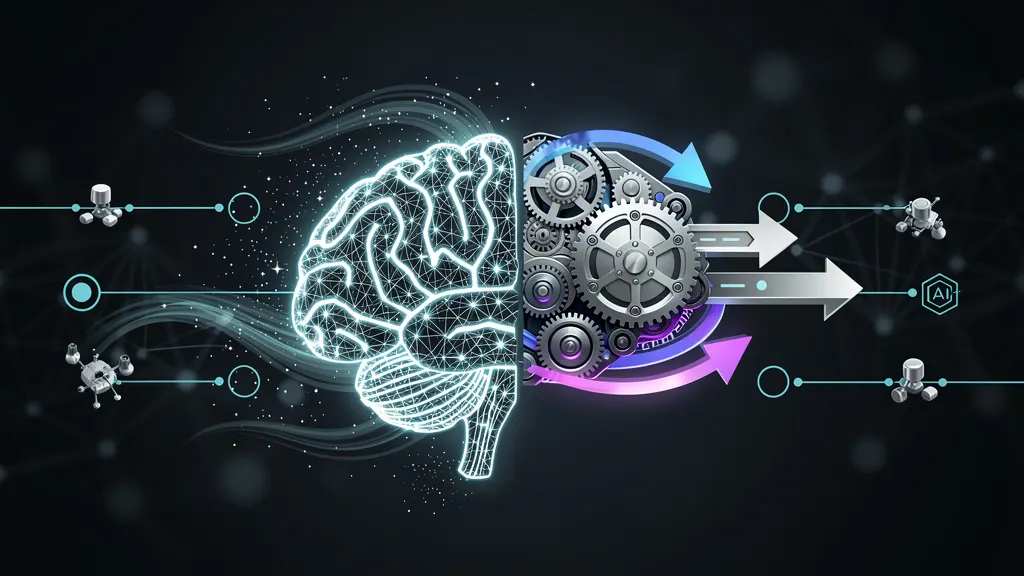
Generative AI models, such as large language models (LLMs), produce content based on patterns in their training data. They are reactive—you prompt them, they respond. Agentic AI, by contrast, is proactive. It can break down a complex goal into sub-tasks, interact with external APIs, remember context, and adjust its behavior based on feedback.
The core difference lies in autonomy. A generative model might write a Python script for you. An agentic system would execute that script, check for errors, fix them, and report the result. This leap requires integrating LLMs with planning algorithms, memory systems, and tool-use capabilities.
Industry leaders are actively exploring this frontier. NVIDIA’s AI blog frequently covers how agentic systems are being used in robotics and simulation. Microsoft’s AI blog discusses copilot-style agents that orchestrate workflows. Anthropic’s research emphasizes safety and alignment for autonomous agents. OpenAI’s news highlights their work on reasoning and tool use in models like GPT-4o.
Requirements
To follow the practical examples in this article, you will need:
- **Python 3.10+** installed on your system.
- **pip** package manager.
- A **valid API key** from OpenAI or Anthropic (we will use OpenAI for this guide).
- Basic familiarity with the command line and Python.
Step-by-Step Installation
We will build a simple agentic system using the `langchain` and `openai` libraries. This agent will be able to perform web searches, calculate math, and retrieve weather data.
1. Create a virtual environment
Isolating dependencies prevents conflicts with other Python projects.
python -m venv agentic-env
source agentic-env/bin/activate  # On Windows: agentic-env\Scripts\activate
2. Install required packages
We need the LangChain framework, the OpenAI integration, and a few utility libraries.
pip install langchain langchain-openai openai python-dotenv3. Set up your API key
Create a `.env` file in your project directory to store your API key securely.
echo "OPENAI_API_KEY=your-api-key-here" > .envReplace `your-api-key-here` with your actual key from the OpenAI platform.
4. Verify installation
Run a quick Python snippet to confirm everything is working.
from dotenv import load_dotenv
from langchain_openai import ChatOpenAI

load_dotenv()
llm = ChatOpenAI(model="gpt-4o")
response = llm.invoke("Say hello from the agent.")
print(response.content)
You should see a greeting printed.
Building an Agentic Workflow
Now we will create an agent that can use tools. LangChain’s agent framework handles planning and execution.
1. Define tools
We will give the agent two tools: a calculator and a web search. For simplicity, we use a mock search function.
from langchain.tools import tool

@tool
def calculate(expression: str) -> str:
    """Evaluate a mathematical expression."""
    try:
        return str(eval(expression))
    except Exception as e:
        return f"Error: {e}"

@tool
def search(query: str) -> str:
    """Simulate a web search. Replace with real API for production."""
    return f"Simulated search result for: {query}"
2. Create the agent
LangChain provides a standard agent executor that orchestrates tool calls.
from langchain.agents import initialize_agent, AgentType
from langchain_openai import ChatOpenAI

llm = ChatOpenAI(model="gpt-4o", temperature=0)
tools = [calculate, search]

agent = initialize_agent(
    tools,
    llm,
    agent=AgentType.ZERO_SHOT_REACT_DESCRIPTION,
    verbose=True,
    handle_parsing_errors=True
)
3. Run the agent
Now ask the agent a question that requires reasoning and tool use.
result = agent.invoke("What is 25 * 4 + 100? Also, search for the capital of France.")
print(result["output"])
The agent will first calculate `25 * 4 + 100 = 200`, then call the search tool for "capital of France", and combine the results.
Usage Examples
Example 1: Multi-step reasoning
Ask the agent to plan a trip, combining arithmetic and search.
agent.invoke("Calculate the total cost if a flight is $450 and a hotel is $120 per night for 5 nights. Then search for top attractions in Paris.")The agent will compute `450 + (120 * 5) = 1050`, then execute the search.
Example 2: Code generation and execution
With additional tools, an agent can write and run code. Add a Python REPL tool:
from langchain_experimental.tools import PythonREPLTool

repl_tool = PythonREPLTool()
tools.append(repl_tool)

agent = initialize_agent(tools, llm, agent=AgentType.ZERO_SHOT_REACT_DESCRIPTION, verbose=True)
agent.invoke("Write a Python script to compute the first 10 Fibonacci numbers and execute it.")
The agent will generate the script, execute it in the REPL, and return the output.
Example 3: Persistent memory
For longer sessions, add memory so the agent remembers past interactions.
from langchain.memory import ConversationBufferMemory

memory = ConversationBufferMemory(memory_key="chat_history")
agent = initialize_agent(
    tools,
    llm,
    agent=AgentType.CONVERSATIONAL_REACT_DESCRIPTION,
    memory=memory,
    verbose=True
)

agent.invoke("My name is Alex.")
agent.invoke("What is my name?")
The agent recalls the name from the conversation history.
Real-World Applications and Industry Insights
Agentic AI is already transforming industries. NVIDIA’s blog highlights how agentic systems power autonomous robots that navigate dynamic environments. Microsoft’s AI blog discusses copilot agents that automate complex workflows in Office 365. OpenAI’s news showcases GPT-4o with tool use, enabling agents to book flights or control smart home devices. Anthropic’s research focuses on aligning agentic behavior with human intent, ensuring safety as autonomy increases.
These developments point to a future where AI systems not only generate content but also execute tasks, adapt to changing conditions, and collaborate with humans in real-time.
Challenges and Considerations
Building reliable agentic systems requires addressing several challenges:
- **Error recovery**: Agents must handle API failures or unexpected inputs gracefully.
- **Safety**: Autonomous actions need guardrails to prevent harmful outcomes.
- **Cost**: Multiple LLM calls per task can become expensive.
- **Latency**: Real-time applications require optimized reasoning loops.
The major AI labs are actively researching these areas, with safety being a top priority as noted in Anthropic’s publications.
Conclusion
The transition from generative AI to agentic AI marks a fundamental shift in how we interact with machines. Instead of generating static outputs, agents now plan, execute, and learn—bringing us closer to truly autonomous systems. By combining LLMs with tools and memory, developers can create powerful agents that tackle real-world tasks.
Start small: build an agent that searches and calculates. Add more tools over time. Monitor its behavior and iterate. The next frontier in AI is not just about what models can generate—it’s about what they can do. And with the right frameworks, you can be part of that frontier today.
For ongoing developments, follow the NVIDIA AI Blog for technical deep dives, Microsoft AI Blog for enterprise applications, OpenAI News for model updates, and Anthropic News for safety research. The journey from generative to agentic AI has just begun.
Sources
FAQ
What is this article about?
This article covers “From Generative AI to Agentic AI: The Next Frontier in Autonomous Systems” in the AI agents category. Generative AI creates content; Agentic AI takes action. This article explores how combining large language models with autonomous decision-making unlocks powerful new capabilities, from self-improving code to adaptive customer service agents.
Who is this useful for?
It is useful for readers who want a practical understanding of AI tools, models, and workflows.
What should I do next?
Read the article, review the listed sources, and test the most relevant ideas in your own workflow.