Why Decade-Old Residual Connections Still Power All of AI (And Why That’s a Problem)
Residual connections, introduced in 2015, underpin virtually every modern AI model from transformers to diffusion networks. This article explores their enduring dominance, practical examples, and the urgent need for architectural innovation.
Tags
Quick summary
Residual connections, introduced in 2015, underpin virtually every modern AI model from transformers to diffusion networks. This article explores their enduring dominance, practical examples, and the urgent need for architectural innovation.
Why Decade-Old Residual Connections Still Power All of AI (And Why That’s a Problem)
In the landscape of artificial intelligence, few innovations have proven as enduring as the residual connection. Introduced in 2015 by researchers at Microsoft, the concept of "skip connections" or "residual connections" was a breakthrough that allowed neural networks to grow deeper without succumbing to vanishing gradients. Today, nearly a decade later, residual connections remain a foundational building block in virtually every major AI architecture—from convolutional networks to transformers, diffusion models, and large language models. This article explores why residual connections persist, how they work in practice, and the growing concerns about their limitations as AI scales to unprecedented sizes.
The Problem Residual Connections Solved
Before residual connections, training very deep neural networks was notoriously difficult. As networks grew deeper—adding more layers to capture complex patterns—the gradients used to update weights during backpropagation would either vanish (become too small to be useful) or explode (become too large). The result was that accuracy would plateau or even degrade with more layers, a phenomenon known as the "degradation problem."
Residual connections addressed this by introducing a simple yet elegant idea: allow the input of a layer to bypass one or more intermediate layers and be added directly to the output. Mathematically, instead of learning a direct mapping \( H(x) \), the layer learns a residual mapping \( F(x) = H(x) - x \), so that the output becomes \( F(x) + x \). This skip connection ensures that gradients can flow directly through the network during backpropagation, preserving signal strength even in networks with hundreds of layers.
The impact was immediate. Microsoft’s ResNet architecture, which introduced residual connections, won the 2015 ImageNet competition with a 152-layer network—far deeper than anything previously achievable. This breakthrough enabled the era of deep learning that followed.
Why Residual Connections Are Still Everywhere
Residual connections are not a relic of the past; they are a core component of modern AI. Here’s why they remain ubiquitous:
1. They Enable Stable Training at Scale
Every major architecture today relies on residual connections for stable optimization. In transformers (the backbone of models like GPT, BERT, and Llama), each attention and feed-forward sublayer is wrapped in a residual connection followed by layer normalization. This design, known as Pre-LN (pre-layer normalization), was refined in the original "Attention is All You Need" paper and remains standard. Similarly, diffusion models like Stable Diffusion use residual blocks in their U-Net backbones to generate high-resolution images.
2. They Are Architecture-Agnostic
Residual connections work equally well in convolutional networks, recurrent networks, and transformers. They are not tied to a specific mathematical formulation—just an additive bypass. This flexibility has allowed them to survive multiple paradigm shifts in AI.
3. They Are Computationally Cheap
Adding a residual connection requires only an element-wise addition and no additional parameters. This makes them highly efficient compared to other regularization or optimization techniques, such as batch normalization or dropout. In large-scale training, where every operation counts, residual connections are a zero-cost win.
4. They Align with Biological Inspiration
Some neuroscientists have noted that residual connections resemble the "skip connections" found in the mammalian visual cortex, where information flows through both direct and indirect pathways. This biological plausibility has made residual connections a natural choice for researchers seeking to emulate brain-like processing.
The Hidden Costs of Ubiquity
Despite their dominance, residual connections are not without problems. As AI models grow to billions and trillions of parameters, the limitations of residual connections are becoming increasingly apparent.
1. Memory and Bandwidth Bottlenecks
Residual connections require storing intermediate activations for backpropagation. In a deep network with hundreds of layers, this can consume enormous amounts of GPU memory. For example, training a 175-billion-parameter model like GPT-3 requires storing activations for every residual block, leading to memory footprints that exceed what most hardware can handle. Techniques like gradient checkpointing (storing only a subset of activations) partially mitigate this, but they add computational overhead.
2. Vanishing Gradients Re-Emerge in Extremely Deep Networks
While residual connections help, they do not completely eliminate the vanishing gradient problem in ultra-deep networks. In models with thousands of layers (common in some vision tasks), gradients can still decay across many residual blocks. This forces researchers to use additional tricks like "stochastic depth" (randomly dropping residual blocks during training) or "warm-up" learning rate schedules.
3. They Encourage Overparameterization
Residual connections make it easy to add more layers without degrading performance, but this often leads to overparameterization. Many modern models are far larger than necessary, consuming excessive energy and compute resources. The "lottery ticket hypothesis" suggests that only a fraction of a network’s weights are actually important—residual connections may mask this redundancy.
4. They Are a Crutch, Not a Solution
Critics argue that residual connections have become a crutch that allows researchers to avoid confronting deeper architectural problems. Instead of designing networks that learn efficiently from scratch, we rely on skip connections to patch over training instabilities. This has led to a proliferation of "ResNet-like" architectures that are modifications of the original 2015 design, rather than true innovations.
Practical Implementation: Building a Residual Network
To understand residual connections in practice, let’s implement a simple residual block and train it on a toy dataset. We’ll use PyTorch, the dominant framework for AI research.
Requirements
- Python 3.8 or higher
- PyTorch 2.0 or higher
- A CUDA-capable GPU (optional, but recommended for training)
Step-by-Step Installation
First, install Python and create a virtual environment to isolate dependencies:
python3 -m venv resnet_env
source resnet_env/bin/activate
Now install PyTorch. Visit pytorch.org for the latest command for your system. For example, for CUDA 11.8:
pip install torch torchvision --index-url https://download.pytorch.org/whl/cu118Install additional libraries:
pip install numpy matplotlib tqdmUsage Examples
Create a file named residual_demo.py with the following code:
import torch
import torch.nn as nn
import torch.optim as optim
import torchvision
import torchvision.transforms as transforms
from tqdm import tqdm

# Define a basic residual block
class ResidualBlock(nn.Module):
    def __init__(self, in_channels, out_channels, stride=1):
        super(ResidualBlock, self).__init__()
        self.conv1 = nn.Conv2d(in_channels, out_channels, kernel_size=3, stride=stride, padding=1, bias=False)
        self.bn1 = nn.BatchNorm2d(out_channels)
        self.relu = nn.ReLU(inplace=True)
        self.conv2 = nn.Conv2d(out_channels, out_channels, kernel_size=3, stride=1, padding=1, bias=False)
        self.bn2 = nn.BatchNorm2d(out_channels)

        # Skip connection: adjust dimensions if needed
        self.shortcut = nn.Sequential()
        if stride != 1 or in_channels != out_channels:
            self.shortcut = nn.Sequential(
                nn.Conv2d(in_channels, out_channels, kernel_size=1, stride=stride, bias=False),
                nn.BatchNorm2d(out_channels)
            )

    def forward(self, x):
        out = self.relu(self.bn1(self.conv1(x)))
        out = self.bn2(self.conv2(out))
        out += self.shortcut(x)  # The residual connection
        out = self.relu(out)
        return out

# Build a simple ResNet for CIFAR-10
class SimpleResNet(nn.Module):
    def __init__(self, num_classes=10):
        super(SimpleResNet, self).__init__()
        self.conv1 = nn.Conv2d(3, 16, kernel_size=3, stride=1, padding=1, bias=False)
        self.bn1 = nn.BatchNorm2d(16)
        self.relu = nn.ReLU(inplace=True)
        self.layer1 = self._make_layer(16, 16, 2, stride=1)
        self.layer2 = self._make_layer(16, 32, 2, stride=2)
        self.layer3 = self._make_layer(32, 64, 2, stride=2)
        self.avgpool = nn.AdaptiveAvgPool2d((1, 1))
        self.fc = nn.Linear(64, num_classes)

    def _make_layer(self, in_channels, out_channels, num_blocks, stride):
        layers = [ResidualBlock(in_channels, out_channels, stride)]
        for _ in range(1, num_blocks):
            layers.append(ResidualBlock(out_channels, out_channels, stride=1))
        return nn.Sequential(*layers)

    def forward(self, x):
        x = self.relu(self.bn1(self.conv1(x)))
        x = self.layer1(x)
        x = self.layer2(x)
        x = self.layer3(x)
        x = self.avgpool(x)
        x = torch.flatten(x, 1)
        x = self.fc(x)
        return x

# Load CIFAR-10 dataset
transform = transforms.Compose([
    transforms.RandomHorizontalFlip(),
    transforms.RandomCrop(32, padding=4),
    transforms.ToTensor(),
    transforms.Normalize((0.5, 0.5, 0.5), (0.5, 0.5, 0.5))
])

trainset = torchvision.datasets.CIFAR10(root='./data', train=True, download=True, transform=transform)
trainloader = torch.utils.data.DataLoader(trainset, batch_size=128, shuffle=True, num_workers=2)

testset = torchvision.datasets.CIFAR10(root='./data', train=False, download=True, transform=transform)
testloader = torch.utils.data.DataLoader(testset, batch_size=128, shuffle=False, num_workers=2)

# Initialize model, loss, optimizer
device = torch.device('cuda' if torch.cuda.is_available() else 'cpu')
model = SimpleResNet().to(device)
criterion = nn.CrossEntropyLoss()
optimizer = optim.SGD(model.parameters(), lr=0.1, momentum=0.9, weight_decay=5e-4)
scheduler = optim.lr_scheduler.StepLR(optimizer, step_size=30, gamma=0.1)

# Training loop
num_epochs = 50
for epoch in range(num_epochs):
    model.train()
    running_loss = 0.0
    for inputs, labels in tqdm(trainloader, desc=f'Epoch {epoch+1}/{num_epochs}'):
        inputs, labels = inputs.to(device), labels.to(device)
        optimizer.zero_grad()
        outputs = model(inputs)
        loss = criterion(outputs, labels)
        loss.backward()
        optimizer.step()
        running_loss += loss.item()

    scheduler.step()
    print(f'Epoch {epoch+1} Loss: {running_loss/len(trainloader):.4f}')

# Evaluate
model.eval()
correct = 0
total = 0
with torch.no_grad():
    for inputs, labels in testloader:
        inputs, labels = inputs.to(device), labels.to(device)
        outputs = model(inputs)
        _, predicted = torch.max(outputs, 1)
        total += labels.size(0)
        correct += (predicted == labels).sum().item()

print(f'Test Accuracy: {100 * correct / total:.2f}%')
Run the script:
python residual_demo.pyThis will train a small ResNet on CIFAR-10, demonstrating how residual connections enable stable training of a 10-layer network. Observe that even with this simple implementation, the model converges reliably—a direct result of the skip connections.
Why This Is a Problem for the Future
The reliance on residual connections is not just a historical curiosity; it is actively shaping the trajectory of AI research. As models grow larger, the computational cost of storing activations for residual connections becomes a primary bottleneck. The recent trend toward "Mixture of Experts" (MoE) models, such as Mixtral 8x7B, partially addresses this by activating only a subset of parameters per input, but residual connections remain in every expert block.
Moreover, the dominance of residual connections may be stifling innovation. Researchers are hesitant to propose architectures that do not include skip connections, because they are seen as essential for training stability. This creates a "local minimum" in the design space—we are optimizing within the residual paradigm rather than exploring alternatives like "depthwise convolutions," "linear attention," or "state space models" (which, ironically, also use residual connections in their implementations).
Alternatives on the Horizon
Several promising alternatives are emerging, though none have yet displaced residual connections:
- Normalizer-Free Networks (NFNet): DeepMind’s NFNet removes batch normalization and residual connections by using a carefully scaled initialization and activation functions. It achieves competitive accuracy on ImageNet without skip connections.
- Deep Equilibrium Models (DEQ): These treat the network as a fixed-point system, eliminating the need for explicit residual blocks by iterating a single layer to equilibrium.
- State Space Models (SSM): Architectures like Mamba use linear recurrence instead of attention, removing the need for residual connections in the attention sublayer. However, they still use skip connections in other parts.
These approaches remain niche, largely because residual connections are so well-understood and easy to implement.
Conclusion
Residual connections are a testament to the power of simple ideas in AI. They solved a critical problem in 2015 and continue to enable the largest models today. However, their ubiquity is also a liability. As AI scales to trillion-parameter models, the memory and computational overhead of residual connections will become a limiting factor. The field must move beyond this decade-old innovation to develop architectures that are inherently stable, efficient, and scalable without relying on skip connections as a crutch.
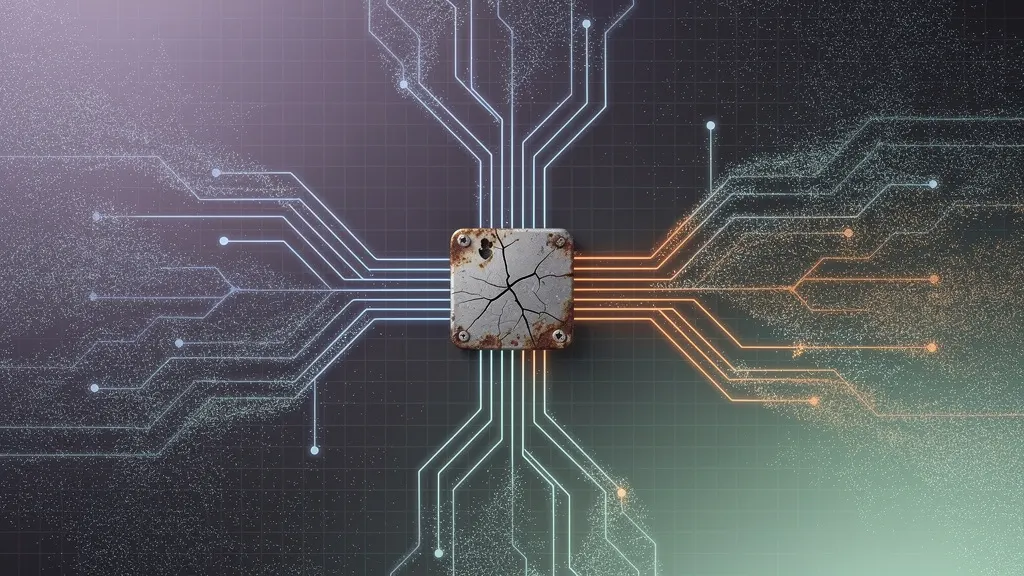
For now, residual connections remain the backbone of AI—but the cracks are beginning to show. The next breakthrough may come not from making residual connections better, but from learning to build networks that don’t need them at all.