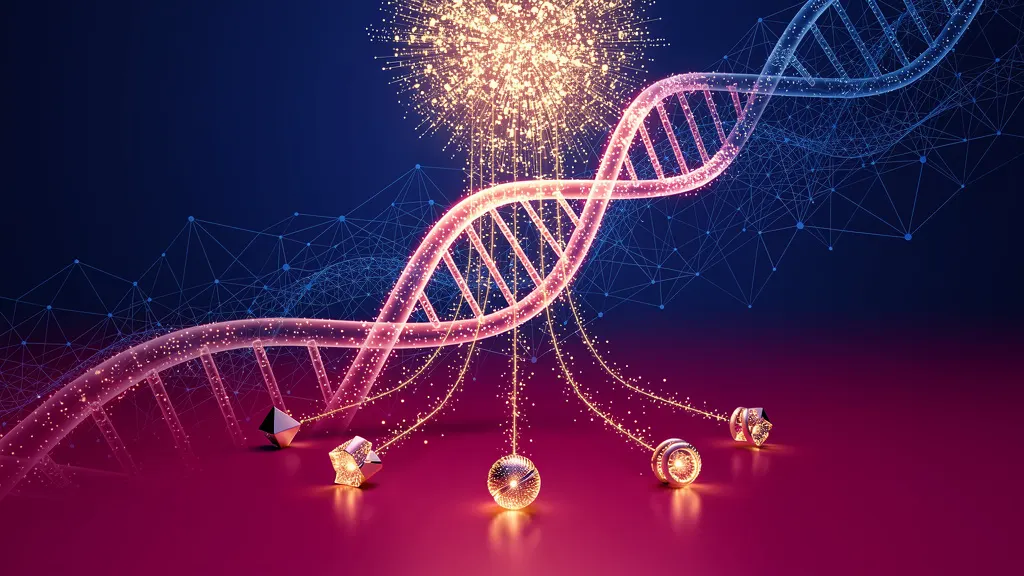
The Next Frontier: How Artificial Intelligence is Reshaping Scientific Discovery
Artificial intelligence is revolutionizing AI research by accelerating hypothesis generation, automating experiments, and uncovering patterns invisible to humans, promising profound advances in medicine, physics, and climate science.
Tags
Quick summary
Artificial intelligence is revolutionizing AI research by accelerating hypothesis generation, automating experiments, and uncovering patterns invisible to humans, promising profound advances in medicine, physics, and climate science.
The Next Frontier: How Artificial Intelligence is Reshaping Scientific Discovery
Introduction
For centuries, scientific discovery has followed a familiar rhythm: human curiosity sparks a hypothesis, careful experimentation tests it, and peer review validates the results. But this process, while powerful, is inherently slow. A single breakthrough can take decades, and the volume of data generated by modern instruments now far exceeds any human’s ability to analyze it manually. Enter artificial intelligence. AI is not merely accelerating science; it is fundamentally reshaping how we ask questions, design experiments, and interpret the natural world. From predicting protein structures to discovering new materials, AI is becoming an indispensable partner in the laboratory. As sources like the MIT Technology Review and DeepMind Blog consistently report, we are entering an era where machine learning models act as co-scientists, uncovering patterns invisible to the human eye and suggesting hypotheses that no researcher would have considered.
The Data Deluge and the Need for AI
Modern science produces data at an unprecedented scale. Telescopes capture terabytes of sky images nightly; genomic sequencers churn out billions of base pairs; particle accelerators generate petabytes of collision data. The human brain, for all its brilliance, cannot sift through this flood effectively. Traditional statistical methods, while robust, often fail to capture non-linear relationships or subtle correlations buried within noise.
This is where AI, particularly deep learning, excels. Neural networks can process vast, high-dimensional datasets, identifying features and patterns that correlate with outcomes of interest. For example, in drug discovery, AI models can screen millions of chemical compounds against a disease target in silico, reducing the need for costly and time-consuming wet-lab experiments. As VentureBeat AI has noted, companies like Insilico Medicine and Recursion Pharmaceuticals are using AI to shorten the preclinical phase from years to months. The key insight is that AI does not replace the scientist’s intuition; it amplifies it by handling the computational heavy lifting.
From Protein Folding to Materials Design
Perhaps the most celebrated recent success of AI in science is the prediction of protein structures. For decades, determining the three-dimensional shape of a protein from its amino acid sequence was a monumental challenge, often requiring months of X-ray crystallography or cryo-electron microscopy. In 2020, DeepMind’s AlphaFold changed everything. As reported on the DeepMind Blog, AlphaFold achieved accuracy comparable to experimental methods for the majority of its predictions. This breakthrough has enabled researchers to model proteins involved in diseases, design new enzymes, and even understand the origins of life.
But the impact extends beyond biology. AI is now used to discover new materials for batteries, solar cells, and catalysts. Instead of synthesizing and testing thousands of candidates, researchers train generative models on known material databases. These models propose novel crystal structures with desired properties, such as high conductivity or thermal stability. The MIT Technology Review has highlighted how AI-driven platforms like the Materials Project and Citrine Informatics are accelerating the search for next-generation energy storage materials. The process is iterative: AI suggests a candidate, a physicist or chemist validates it, and the result feeds back into the model for refinement.
Accelerating Hypothesis Generation and Experimentation
One of the most profound shifts AI brings is in the very first step of the scientific method: forming a hypothesis. Traditionally, hypotheses arise from literature review, serendipitous observation, or theoretical reasoning. AI can now mine millions of scientific papers, extracting relationships between variables that humans might overlook. For instance, natural language processing models can scan abstracts to find unexpected connections between genes and diseases, or between environmental factors and biological pathways.
Moreover, AI is taking over the design of experiments themselves. Bayesian optimization algorithms can decide which parameters to test next in a multi-dimensional experimental space, minimizing the number of runs needed to reach an optimal result. This is particularly valuable in fields like synthetic biology, where the combinatorial space of genetic modifications is enormous. As the AI Alignment Forum has discussed, such autonomous experimentation raises questions about interpretability and control—if an AI suggests a surprising experiment, how do we ensure its reasoning is sound? Yet the practical benefits are undeniable: fewer failed experiments, faster optimization, and more efficient use of resources.
Challenges: Reproducibility, Bias, and Interpretability
Despite its promise, AI-driven science is not without pitfalls. A major concern is reproducibility. Machine learning models are notoriously sensitive to training data, hyperparameters, and random seeds. A model that achieves high accuracy on one dataset may fail completely on another, leading to false discoveries. The AI Alignment Forum has emphasized the need for rigorous benchmarking and open-source code to ensure that AI findings can be independently verified.
Bias is another critical issue. If the training data overrepresents certain populations (e.g., European genomes) or certain experimental conditions, the AI’s predictions will be biased accordingly. This can lead to flawed conclusions in personalized medicine or climate modeling. Scientists must remain vigilant about dataset composition and actively seek diverse sources.
Perhaps the most fundamental challenge is interpretability. Many state-of-the-art AI models, especially deep neural networks, are "black boxes." They produce accurate predictions, but understanding why they made a particular decision is difficult. In scientific discovery, understanding the underlying mechanism is often more important than the prediction itself. Researchers are developing explainable AI techniques—such as attention maps, feature importance scores, and surrogate models—to shed light on the reasoning. However, as VentureBeat AI has reported, balancing performance with interpretability remains an active area of research.
The Human-AI Partnership
The most productive future for science is not one where AI replaces humans, but one where they collaborate synergistically. AI excels at pattern recognition, optimization, and handling massive data. Humans excel at creativity, intuition, ethical reasoning, and understanding context. The ideal workflow might look like this: an AI mines literature and suggests a novel hypothesis; a human scientist refines the hypothesis based on domain knowledge; the AI designs an efficient experimental protocol; the human carries out the key experiments; the AI analyzes the results and proposes the next iteration.
This partnership extends to communication as well. AI can generate draft manuscripts, create figures, and even suggest peer reviewers. But the final interpretation, the narrative, and the ethical considerations remain firmly in human hands. As the MIT Technology Review has noted, AI tools are becoming as essential to the modern scientist as the microscope or the centrifuge.
Ethical and Societal Implications
As AI reshapes discovery, it also reshapes the incentives and power structures of science. Who owns the AI models trained on public data? How do we ensure that AI-driven discoveries benefit all of humanity, not just well-funded labs? The AI Alignment Forum has raised concerns about the concentration of AI expertise in a few private companies, which could lead to an uneven playing field. Open science initiatives and public AI models are crucial to democratizing access.
There is also the risk of "AI hype" leading to overconfidence. Not every problem needs a deep learning solution; sometimes simpler methods are more appropriate. Scientists must maintain a healthy skepticism and validate AI predictions with traditional methods. Furthermore, as AI systems become more autonomous, we need robust frameworks for accountability—if an AI-guided experiment produces a dangerous outcome, who is responsible?
The Road Ahead
Looking forward, several trends will define the next decade of AI in science. First, foundation models—large, pre-trained neural networks that can be fine-tuned for many tasks—will become more common. A single model might analyze genomic sequences, predict drug interactions, and design experiments, all with minimal retraining. Second, AI will increasingly integrate with robotics, enabling fully autonomous laboratories that run experiments 24/7. Third, we will see AI systems that can generate not just predictions, but also causal explanations, moving beyond correlation to causation.
The DeepMind Blog and other sources suggest that we are only scratching the surface. AI has already helped discover new antibiotics, optimize fusion reactor designs, and map the connectome of the brain. As algorithms improve and data grows, the pace of discovery will only accelerate.
Conclusion
Artificial intelligence is not a replacement for scientific curiosity; it is a catalyst. By handling data analysis, hypothesis generation, and experimental design, AI frees scientists to focus on what they do best: asking bold questions, making creative leaps, and applying knowledge for the benefit of society. The next frontier of scientific discovery is not a single breakthrough, but a new way of working—one where human and machine intelligence combine to explore the unknown more deeply and rapidly than ever before. The challenges of reproducibility, bias, and interpretability are real, but they are solvable with careful practice and open collaboration. As we stand on the threshold of this new era, one thing is clear: the future of science is intelligent, collaborative, and profoundly exciting.