Project Suncatcher Receives First AI Response from Orbit
Google Research announced the first AI response from a data center class TPU in orbit via the Project Suncatcher prototype satellite. The onboard Gemma 4 model generated a haiku during a pass over Svalbard, Norway, marking a milestone in powering AI compute in space.
Tags
Quick summary
Google Research announced the first AI response from a data center class TPU in orbit via the Project Suncatcher prototype satellite. The onboard Gemma 4 model generated a haiku during a pass over Svalbard, Norway, marking a milestone in powering AI compute in space.
Project Suncatcher Receives First AI Response from Orbit
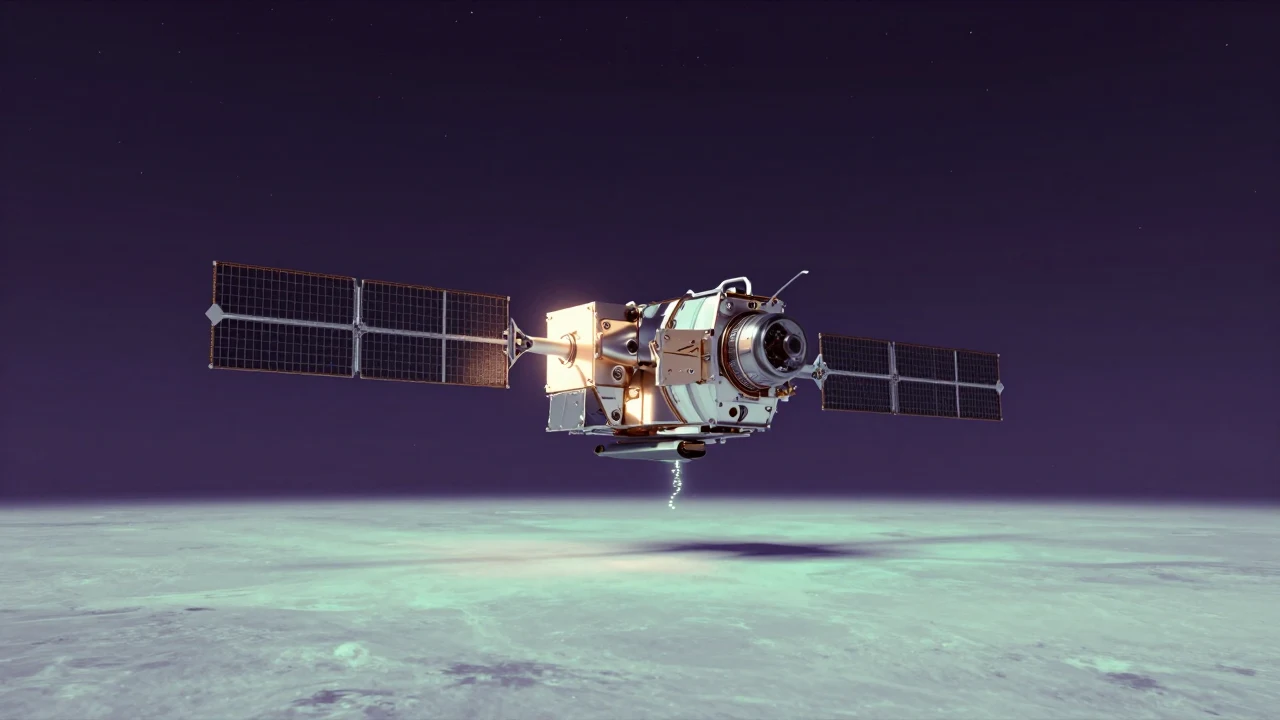
On October 30, 2026, Google Research announced a significant milestone in the deployment of artificial intelligence infrastructure beyond Earth. The project, known as Project Suncatcher, has successfully received its first AI response from a prototype satellite currently in orbit. This achievement marks the first-ever generation of an AI response from a data center-class TPU (Tensor Processing Unit) operating in a space environment.
The announcement details the transition from the initial launch to the successful execution of machine learning workloads in orbit, highlighting the technical steps required to bring terrestrial AI capabilities into the cosmos.
Launch and Commissioning Timeline
The journey toward this milestone began on October 1, 2026, with the launch of the Project Suncatcher prototype satellite. According to the project's primary source, this launch represented the first step in a long-term research moonshot dedicated to exploring the feasibility of powering AI compute in space.
Following the launch, the team focused on a rigorous commissioning process. Over the subsequent weeks, engineers completed a checklist that involved powering up the host systems and TPU trays. These steps were critical to ensuring the hardware was operational before attempting complex inference tasks. The team successfully ran early machine learning tests during this phase, validating the basic functionality of the onboard systems before moving to more sophisticated interactions.
The "Hello World" Milestone
The culmination of these efforts occurred this week, as the project team reached their "Hello World" milestone. This event involved uplinking a prompt to the satellite during a ground-station pass and receiving a generated response via downlink.
The system utilized an onboard Gemma 4 open model for this interaction. The specific prompt requested the model to generate a haiku about the experience of being in space. As the satellite passed over Svalbard, Norway, the downlinked output confirmed the success of the operation. The generated poem read:
Blue marble below
Data streams in silent grace
Starlight feeds my core. ✨
This output demonstrated that the TPU could not only execute code but also perform generative tasks with creative constraints, a key requirement for advanced AI applications.
Expanded Testing and Future Roadmap
Following the initial haiku generation, the team expanded their testing scope to include space-themed limericks and telemetry prompts. These additional tests were designed to report the technical status of the payload systems, further verifying the reliability of the communication link and the computational engine.
Looking ahead, the project outlines a series of planned tests to evaluate how TPUs perform under the unique environmental conditions of orbit. Specifically, the research team intends to assess the hardware's resilience against thermal stress and radiation exposure. Verifying that TPUs can reliably execute workloads in space is a prerequisite for the next major phase of the project.
The long-term vision includes a milestone scheduled for 2027, which involves the deployment of twin interconnected satellites. This expansion would allow for more complex distributed computing architectures in space, moving beyond a single prototype to a networked system.
Technical Implications and Challenges
The successful operation of a data center-class TPU in orbit addresses a fundamental question in the field of space computing: can the massive scale of modern AI hardware survive and function in the harsh environment of space?
The project distinguishes between the pretraining of models and their fine-tuning or deployment in new environments. In this case, the Gemma 4 model was deployed to perform inference tasks. The ability to run these workloads in orbit suggests that the thermal management and radiation shielding of the hardware are sufficient to maintain performance levels comparable to those on Earth.
However, the source notes that this is an important achievement on the "long road ahead." The current prototype serves as a proof of concept. The transition from a single satellite to a twin-satellite network in 2027 will require solving additional engineering challenges related to inter-satellite communication, power distribution, and redundancy.
Conclusion
Project Suncatcher has officially confirmed that AI compute can operate in orbit. By receiving the first AI response from a data center-class TPU in space, Google Research has validated a critical component of their cosmic moonshot. The successful generation of a haiku by the onboard Gemma 4 model, along with subsequent telemetry tests, demonstrates the viability of the current prototype.
As the team moves toward evaluating thermal and radiation performance and plans for twin satellites in 2027, the project sets a new precedent for where AI infrastructure can be deployed. The chips have officially earned their space wings, marking a pivotal moment in the integration of artificial intelligence with aerospace engineering.
Source: https://blog.google/innovation-and-ai/models-and-research/google-research/project-suncatcher-satellite-response