Empowering Frontline Maternal Care with AI-Assisted Ultrasound
A prospective multi-center study shows AI-based blind sweep ultrasound enables non-sonographer operators to deliver expert-level gestational age assessments. This approach expands life-saving maternal care globally by allowing minimally trained workers to use low-cost probes, achieving accuracy comparable to expert sonographers across diverse clinical settings.
Tags
Quick summary
A prospective multi-center study shows AI-based blind sweep ultrasound enables non-sonographer operators to deliver expert-level gestational age assessments. This approach expands life-saving maternal care globally by allowing minimally trained workers to use low-cost probes, achieving accuracy comparable to expert sonographers across diverse clinical settings.
Empowering Frontline Maternal Care with AI-Assisted Ultrasound
The World Health Organization (WHO) estimates that more than 250,000 preventable deaths occur worldwide each year due to pregnancy-related complications. While prenatal ultrasound is a critical tool for improving outcomes and reducing fetal and maternal mortality, a significant barrier remains: two-thirds of the global population lacks access to diagnostic medical imaging like ultrasound. Current methods that support maternal health rely heavily on specialized clinical training, leaving millions in low-resource settings without access to a single ultrasound during their entire pregnancy.
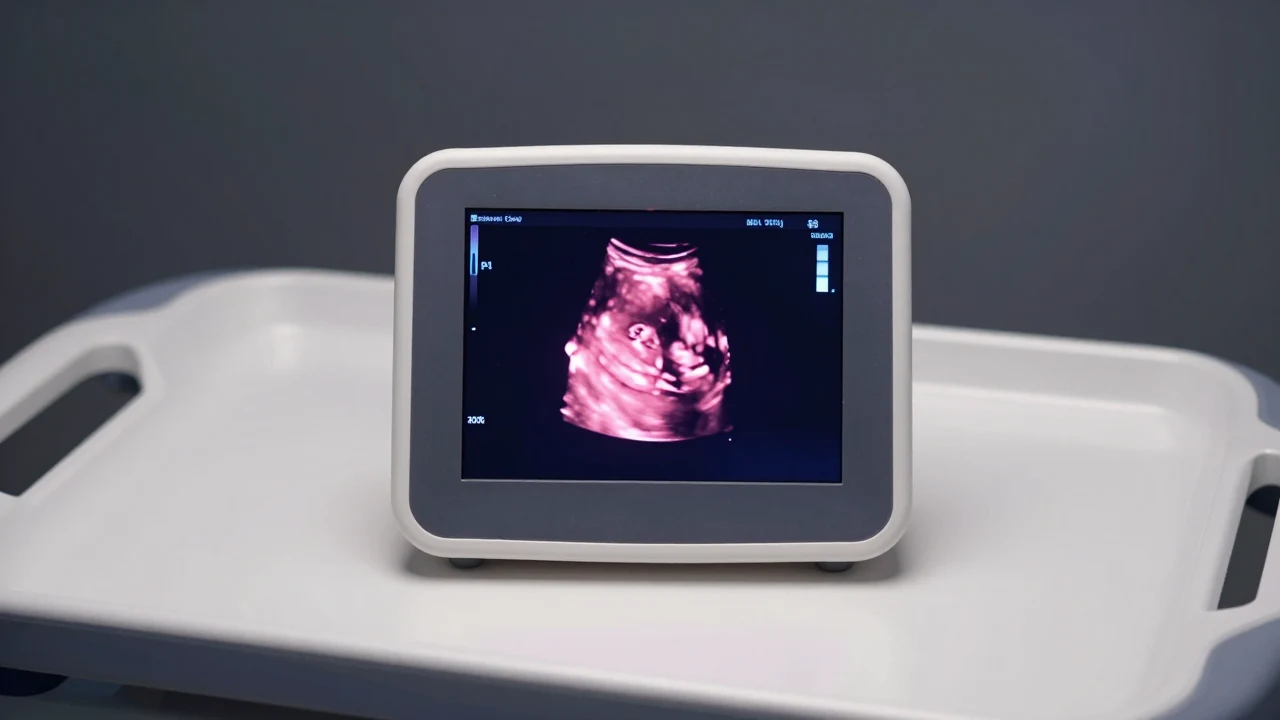
To address this gap, researchers at Google Research have developed a machine learning system designed to interpret "blind sweep" ultrasounds. This approach allows frontline healthcare workers without specialized sonography training to perform scans by simply gliding low-cost, portable ultrasound probes across the abdomen in a standardized pattern. By combining minimal training requirements with AI interpretations, the goal is to create a tool that increases the availability of ultrasound-based pregnancy assessment, thereby improving access to higher-quality maternal health globally.
Evaluating Performance Across Diverse Clinical Settings
For a medical AI system to safely scale globally, it must demonstrate generalizability—maintaining accurate diagnostic performance when introduced to new clinical settings with different patient populations, clinical workflows, and ultrasound hardware variations than those on which the model was trained.
In a prospective multi-center study published in JAMA Network Open, titled "Generalization of AI-Based Gestational Age Assessment Using Blind Sweep Ultrasonography," the research team evaluated how effectively an AI model for gestational age assessment generalizes across diverse environments. The study moved beyond retrospective validation to show how the AI system performs reliably running live on mobile devices in real clinics, utilizing only novice operators and unfamiliar ultrasound equipment with minimal fine-tuning.
The study compared the AI system's ability to estimate fetal age from blind sweep ultrasounds against the clinically standard expert approach. This traditional method relies on an expert sonographer locating multiple specific cross-sections of the fetus to take precise biometry measurements. This process is difficult to scale, requires years of training, and is highly operator-dependent.
The research AI system was originally trained on ultrasound data collected in North Carolina and Zambia using a set of Sonosite, GE, and Butterfly Networks commercial ultrasound probes. To test efficient system tuning and generalizability, the model was minimally tuned on only one target population and then prospectively tested across two distinct environments:
- Northwestern Medicine: An urban, high-resource academic medical center in Chicago, IL, United States.
- Jacaranda Health: An urban community clinic network in Nairobi, Kenya.
All sites differed in various care dimensions, including when women first come in for prenatal care, how many routine ultrasounds they receive, and how gestational age is usually dated. To understand generalizability, no data from the Nairobi site was used for fine-tuning, maintaining the Kenyan clinical validation as a strictly independent, external test.
Key Findings: Matching the Expert Standard
The study leveraged a small pilot dataset of 120 participants from Chicago—approximately 6% of the original training set—to adapt the model to new probe hardware and extend the gestational age prediction range beyond 36 weeks. The blind sweep model, trained on 1,968 participants from North Carolina, US, and Zambia, was fine-tuned on scans from 120 participants from Chicago, Illinois. It was then tested prospectively in Chicago (n=192) and Nairobi (n=193), with no fine-tuning on Nairobi data.
According to Google Research, the model was non-inferior to expert sonographers at determining gestational age in both settings. The combined mean absolute error (MAE) was 4.18 days for the AI system versus 4.48 days for expert sonographers.
Specific results from the primary cohort of 385 participants between 16 and 36 weeks of pregnancy included:
- Clinically Non-Inferior Accuracy: Across both cohorts, the AI model achieved an MAE of 4.18 days in estimating gestational age. This successfully demonstrated non-inferiority to the standard clinical procedure performed by expert sonographers, which had an MAE of 4.48 days.
- Cross-Setting Generalization: In Chicago, the adapted model achieved an MAE of 4.10 days. In Nairobi, with zero local optimization, the model achieved a comparable MAE of 4.27 days.
- Robustness in Complex Scenarios: Beyond accuracy, exploratory metrics showed that the research AI system was resilient in complex scenarios. For instance, in cases of fetal weight extremes (above the 90th percentile), the model outperformed traditional biometry formulas, demonstrating robustness against variations in fetal size.
These findings indicate that AI-based systems can analyze standardized "blind sweeps" images acquired by operators without specialized sonography training. The AI estimate of fetal age had accuracy comparable to the current standard of care from expert operators and more expensive traditional, cart-based ultrasound machines.
Lessons Learned During Prospective Deployment
Studying the capabilities of this scalable technology allowed researchers to actively observe and optimize how AI behaves in live clinical environments. By deploying the system directly into everyday clinical workflows, the team gained practical insights that help design for real-world use.
One specific observation highlighted the importance of swappable batteries over plug-in docking stations for keeping devices charged between consecutive patients. Such logistical details are crucial for the sustainability of point-of-care tools in resource-constrained settings.
Furthermore, the study emphasized that deploying AI systems like this requires building deep trust with both clinicians and patients. One important way to ultimately achieve this is by building clear safeguards into the app. Google Research noted that a key safeguard is the production of model confidence estimates by the AI. These estimates allow the system to reject poor-quality sweeps and convey model uncertainty to the clinician user, ensuring that the technology acts as a supportive tool rather than a replacement for clinical judgment.
Looking Ahead: Expanding Access to Care with AI
The insights gained from this research inform the development of next-generation, multimodal medical intelligence. The study demonstrates the potential to expand prenatal coverage for millions in under-resourced areas by empowering minimally trained community health workers to perform reliable ultrasonography assessments.
By enabling these health workers to perform assessments with minimal training, the technology has the potential to significantly expand prenatal screening coverage. As stated in the study, the gestational age is the master timeline for all screening, treatments, and indications for delivery. Improving the accuracy and accessibility of this assessment is a significant step toward expanding life-saving maternal care globally.
Through continued work, the research team strives to provide the development community and scientists with the answers they need to improve clinical care and make it helpful and accessible to all. This point-of-care research represents a potential application of a broader vision for expanding healthcare accessibility through AI, ensuring that every mother, regardless of location, has the chance for a healthy pregnancy and a safe delivery.
Conclusion
The prospective multi-center study demonstrates that AI-based blind sweep ultrasound assessment can enable non-sonographer operators with low-cost probes to deliver expert-level gestational age assessments. By achieving accuracy comparable to expert sonographers across diverse clinical settings and hardware, this research marks a significant step toward expanding life-saving maternal care globally. The combination of minimal training requirements, robust generalizability, and practical deployment insights lays the groundwork for more resilient, accessible healthcare systems.
Source:
- Empowering frontline maternal care with AI-assisted ultrasound — Google Research — https://research.google/blog/empowering-frontline-maternal-care-with-ai-assisted-ultrasound